
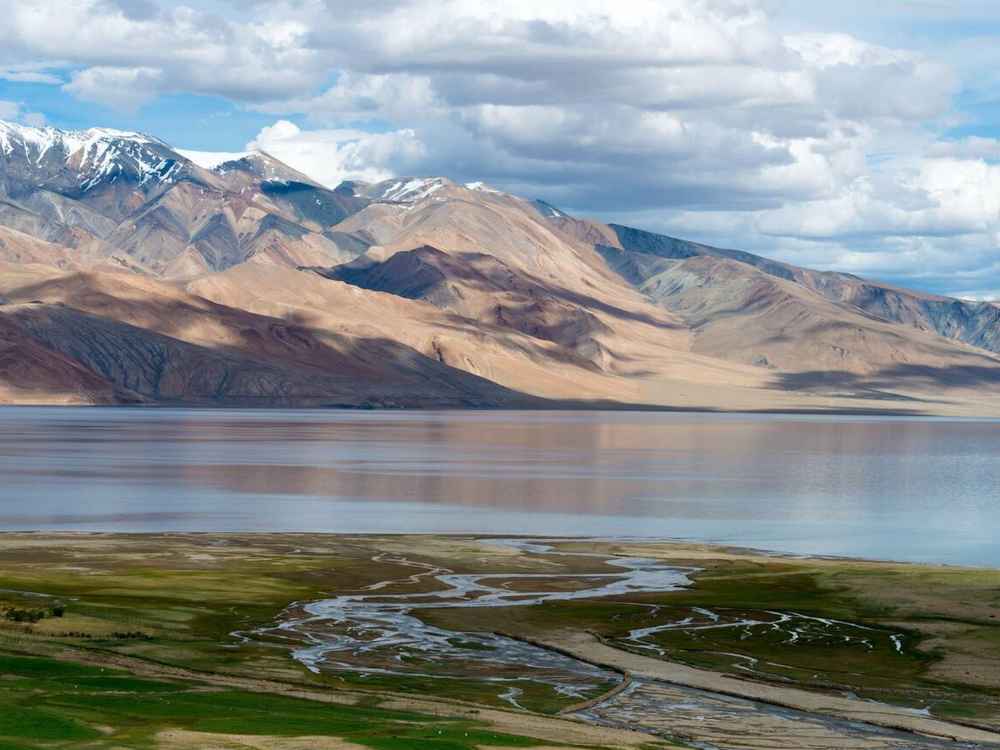
Picture a lake bluer than the sky, surrounded by a seemingly sky-scraping, arid, mountain range. This is Tso Moriri Lake, located in the Changthang region of Ladakh. While Tso Moriri is often overshadowed by Pangong Tso; well known for its cottages in Pangong Lake. Tso Moriri provides a more subtle, tranquil experience in nature.
This will be your guide for the journey from Leh to Tso Moriri, a road trip that is as enchanting as the destination. Rest assured regardless of your interests, whether you’re an adventure junkie or a peace seeker, we’ll cover routes, the best times to visit, and accommodations in this high-altitude wonder.
Where is Tso Moriri?
At an astonishing altitude of 4,522 meters (14,836 feet), Tso Moriri Lake is one of the highest lakes in all of India. Tso Moriri lies fully in India, while Pangong is split with China. It is located around 220 kilometers southeast of Leh, in the Changthang Plateau of Ladakh, Northern India. Tso Moriri is much more remote than Pangong, which leads to it being less developed and commercialized. This means that it has a less altered and more natural landscape, a characteristic that is becoming less and less common.
Tso Moriri: A Ramsar Wetland Site
What makes Tso Moriri Ladakh exceptionally special is its designation as a Ramsar Wetland Reserve. Meaning it is a protected wetlands of international importance and is critical for breeding migratory birds.
Here, rare species breeding and migratory birds like the Bar-headed Goose and Great Crested Grebe can be observed, and the breathtaking Black-necked Crane can be seen soaring through the sky. The Lake also shelters the Tibetan Wild Ass, Kiang, marmots, and on rare occasions the elusive Snow Leopard in the surrounding hills. The water is slightly salt and brackish, and it freezes completely during the harsh winters.
The lake’s sanctity and calm is undisturbed by heavy commercial activities or motorboats, making it a unique spiritual experience compared to other tourist attractions.
Getting to Tso Moriri
Getting to Tso Moriri from Leh is an experience that requires planning and time, and there are two primary routes.
Route 1 – Leh → Upshi → Chumathang → Mahe → Tso Moriri
This is the most commonly used route and, in most cases, the most time effective, making it the most popular route for the Leh to Tso Moriri journey.
Distance: approximately 220 km
Time: 6-7 hours
The Drive: This time you will have to take the Indus river to Leh-Manali highway Upshi. Then you will have to take the Indus river again but this time to Chumathang. Chumathang is famous for its hot springs. It is a good place to take a break at the hot springs and have tea. Then after Mahe bridge the landscape will open up to the Changthang plateau and after that will the lake.
Route 2 – Leh → Tanglang La → Tso Kar → Sumdo → Tso Moriri
This is also the drive for you if you want to cover a greater distance and see another lake.
Distance: approximately 260 km
Time: 8-9 hours
The Drive: This route also goes a bit into the Manali-Leh highway and goes over the Tanglang La Pass (2nd highest motorable pass in the world). You will see the Tso Kar lake which is also known as White lake because of the salt deposits. Then you will drive over the geothermal active Puga Valley and Sumdo before arriving at Tso Moriri. This route can be a bit rough but the views are worth it.
Permit
Tso Moriri is close to the border, so Indian citizens need an Inner Line Permit (ILP) and foreigners need a Protected Area Permit (PAP). Permits can be applied for online through the Leh administration website, or through a registered travel agent in Leh. You need to have photocopies of your permit, as these are collected at checkpoints like the Mahe Bridge.
Best Time to Visit Tso Moriri
Tourism in Tso Moriri is limited to short time periods, largely due to the weather. The ideal time to visit is in the summer, between May and September.
Summer (May – Sep): The lake is at its best, and evokes a range of blue shades as the ice melts. During the day, Tso Moriri is warm around 15°C. However, the temperatures can drop to 0°C, 5°C at night.\
Winter (Oct – Apr): The lake is frozen and snow can make temperatures drop are -25°C. Most of the hotels and homestays close down during this period.
Things to Do at Tso Moriri
Bird Watching: If you are a nature lover and ornithologist, you would appreciate the lake and should pack your binoculars.
Korzok Monastery: Explore the 400-year-old monastery in the Korzok village, located on the banks of the monastery. Korzok Monastery showcases the spiritual history of the Changpa nomads.
Korzok Village: You can hike to the viewpoints close to Korzok village which provide a panorama of the lake, and surrounding peaks Chamser and Lungser Kangri
Landscapes: The stark mountains and changing light on the water provide great opportunities for landscape photography.
Things to do Near Tso Moriri
Tso Kar Lake: This saline lake is great for wildlife spotting and is often visited along with Tso Moriri.
On the way from Tso Kar, the Puga Valley can be found which is well known for its sulphur springs and mud pools
Chumathang Hot Springs: Located on the primary route, these natural hot springs are said to be beneficial for one’s health.
Where to Stay in Tso Moriri
Korzok village is the primary location for accommodations. Do not anticipate extravagance, as the accommodations emphasize basic comfort and warmth.
Tso Moriri Camps: Tented camps that are semi-luxurious are pitched during the season. They provide comfortable beds, warm blankets, and private bathrooms.
Tso Moriri Homestay: If you’re looking for an authentic cultural experience, consider sleeping in one of the local families’ homes. It’s an affordable way to sample local cuisine and spend time with local people.
Tso Moriri Hotels: In Tso Moriri, there are a number of guesthouses and inexpensive hotels that provide solid hotel accommodation. If the wind is howling, these are certainly much cozier than the tents.
Note: Be aware that electricity is only available for a few hours in the evenings, so be sure to recharge your electronics before your arrival.
Travelers often choose to stay around Pangong Lake before visiting Tso Moriri. A cottage in Pangong Lake, such as Mystic Mountains Cottage, offers better comfort, stable amenities, and scenic views compared to remote high-altitude camps, making it a smart stopover during your Ladakh journey.
What Makes Tso Moriri Special?
Tso Moriri is about switching off the outside world and switching on to your inner world. When you’re surrounded by huge mountains, big valleys, and big expanses of desert, your mind finds peace. Tso Moriri is not like the other popular destinations, which can be packed with tourists like an opened picnic basket. It is a destination to simply be. It is a destination to experience the unspoiled, exquisite, wild soul of Ladakh.
FAQs
Q1. Is Tso Moriri freshwater or saltwater?
Tso Moriri is a brackish lake, which means it is a combination of saltwater and fresh water, although it is less salty than Pangong Tso.
Q2. Why is Tso Moriri lake famous?
Tso Moriri is famous for its Ramsar Wetland site, its stunning turquoise water, and its high-altitude breeding area for rare migratory birds, including the Black-necked Crane.
Q3. Is it worth visiting Tso Moriri?
Definitely. The travel from Leh to Tso Moriri is absolutely justified if you love the serenity, nature, and lesser-known travel destinations.
Q4. How do I reach Tso Moriri from Leh?
You have the option to either rent a taxi or bike from Leh. The most straightforward route is through Upshi, Chumathang, and Mahe Bridge. This should take you about 6 to 7 hours.
Q5. Is a permit needed to travel from Leh to Tso Moriri?
An Inner Line Permit (ILP) is necessary, which is applicable to all domestic tourists, and the Protected Area Permit (PAP) is applicable to international tourists.