

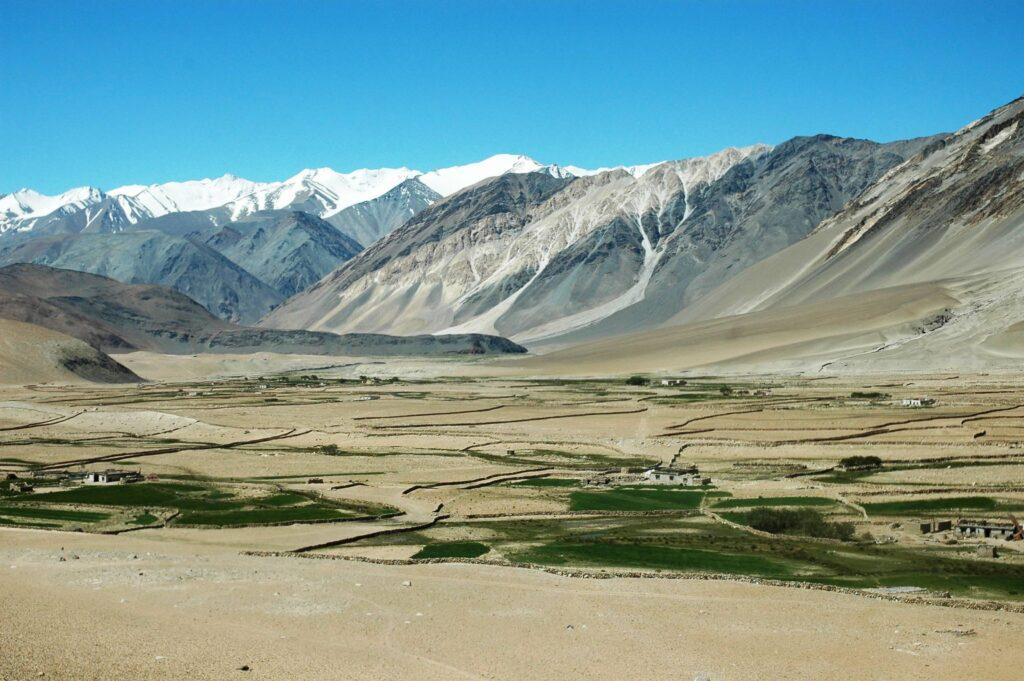
Exploring the high-altitude desert of Ladakh offers many hidden gems, and the journey from Phobrang to Pangong Lake is one such adventure. This scenic route, popular among thrill-seekers and nature lovers, offers a rare glimpse into the raw and untouched landscapes of the Changthang region, eventually leading you to Pangong Tso in Ladakh, one of the most iconic high-altitude lakes in the world.
If you’re planning this offbeat trip, our guide provides all the details you need for a smooth and memorable experience, covering the distance, route, permits, and more.
Where is Phobrang village located?
Phobrang is a small, remote village situated in the Durbuk tehsil of the Leh district in Ladakh. Tucked away in the vast Changthang Wildlife Sanctuary, it sits at a breathtaking altitude of approximately 14,500 feet (about 4,420 meters). The village is strategically located near the Line of Actual Control (LAC) with China, making it an area of significant military importance.
Phobrang serves as a gateway to several challenging passes and remote trekking routes, attracting adventurers looking to explore beyond the usual tourist circuits. Its sparse landscape, dotted with traditional Ladakhi homes and surrounded by barren mountains, offers a glimpse into the resilient life of its inhabitants.
How to Reach Pangong Lake from Phobrang Village
- Travel Mode:
- Public transport is not available on this route.
- You can either hire a private taxi or drive your own vehicle. A 4×4 SUV is highly recommended due to the challenging off-road terrain.
- Experience:
- The journey is an exciting off-road adventure, offering a chance to explore some of the most stunning and isolated landscapes in Ladakh.
- This route is less crowded compared to other routes to Pangong Lake, providing a sense of solitude and pristine natural beauty.
- The vast, open vistas and rugged terrain make this trip a memorable part of any Ladakh itinerary.
Route from Phobrang to Pangong Lake
- Distance:
- The Phobrang to Pangong Lake distance by road is approximately 30-35 kilometers.
- Road Conditions:
- The route is not a paved road but a dirt track that winds through the mountains.
- The terrain is rough and requires careful driving, especially for those unfamiliar with off-road conditions.
- Travel Time:
- The journey can take anywhere from 1.5 to 2.5 hours, depending on road conditions and the capability of your vehicle.
- Route Details:
- The most common route is:
Phobrang > Marsimik La Road > Chartse > Pangong Tso. - Starting from Phobrang, you will follow the track towards Marsimik La pass. However, you do not need to ascend the pass itself.
- A fork in the road will direct you towards the shores of Pangong Lake.
- The trail eventually connects to the northern bank of the lake near a small settlement called Chartse. From there, you can drive along the lake’s edge towards popular areas like Lukung and Spangmik.
- The most common route is:
Permit Requirements
- Why Permits Are Needed:
- The area is highly sensitive due to its proximity to the border, and permits are mandatory for all travelers.
- Types of Permits:
- Indian Tourists: Require an Inner Line Permit (ILP) that specifically mentions “Phobrang” and the route to Pangong Lake.
- Foreign Nationals: Require a Protected Area Permit (PAP).
- How to Obtain Permits:
- Permits can be obtained online from the official Leh district administration website.
- Alternatively, you can get them through a registered travel agent in Leh.
- Important Tips:
- Carry multiple photocopies of your permit, as you will need to submit them at various army checkpoints along the way.
- Always carry a valid government-issued photo ID, such as an Aadhar card, passport, or driver’s license, for verification purposes.
Best Time to Visit Phobrang
- Ideal Travel Period:
- The best time to visit Phobrang and undertake the journey to Pangong Lake is during the summer months, from late May to mid-September.
- During this period, the weather is relatively pleasant, with comfortable daytime temperatures.
- The snow from the winter has melted, making the roads and tracks accessible.
- Avoid Traveling During Winter:
- From late September onwards, temperatures drop sharply, and the region experiences extreme cold.
- Heavy snowfall from October to April completely cuts off the area, rendering the routes impassable.
Things to Do in Phobrang
Phobrang is a destination for those who appreciate tranquility and raw nature, rather than a place with a long list of tourist activities.
- Stargazing: The clear, unpolluted skies at this high altitude offer a spectacular view of the Milky Way and countless stars. It’s a paradise for astrophotographers.
- Interact with Locals: Spend time with the warm and hospitable people of Phobrang to learn about their unique culture, traditions, and way of life in this harsh environment.
- Acclimatize: Use your time in Phobrang to properly acclimatize to the high altitude before heading towards Pangong Lake or attempting more strenuous treks.
- Nature Walks: Take short walks around the village to soak in the stark beauty of the Changthang plateau.
Places to Visit Near Phobrang
While Phobrang itself is the main attraction, its location serves as a base for exploring other remote wonders.
- Pangong Tso: The magnificent high-altitude saltwater lake is the primary destination. Its shimmering blue waters changing color throughout the day are a sight to behold.
- Marsimik La: For the most adventurous, the challenging drive to Marsimik La pass (permission is extremely difficult to get) offers an unparalleled thrill and panoramic views.
- Kaksang La: Another high-altitude pass in the region that offers stunning vistas, though it requires specific permits and a capable vehicle.
- Chushul: A historic village further south along the lake, known for its war memorial and vast plains.
Where to Stay in Phobrang
Accommodation options in Phobrang are very limited and basic, reflecting its remote nature.
- Homestays: The most authentic option is staying in a local homestay, where you live with a Ladakhi family, enjoy home-cooked meals, and experience daily village life. These simple stays are ideal for travelers who prefer cultural immersion over more developed options like a cottage in Pangong Lake.
- Guesthouses: There may be one or two very basic guesthouses in the village. It is advisable to have your stay arranged in advance through a travel agent in Leh, especially during the peak season.
Do not expect luxury. Running hot water is a rarity, and electricity may be available for only a few hours in the evening via solar power or generators.
FAQs
Q1. Is Phobrang a village or a region?
Phobrang is a specific village. However, the name is sometimes used to refer to the broader area around it within the Changthang region due to its significance as a nodal point for various routes.
Q2. What is the best time to visit Phobrang?
The ideal time to visit Phobrang is from late May to mid-September. The weather is favorable during these months, and the roads are open and accessible.
Q3. Are permits required to travel from Phobrang to Pangong Lake?
Yes, absolutely. An Inner Line Permit (for Indians) or a Protected Area Permit (for foreigners) is mandatory. The permit must explicitly mention the route you intend to take.
Q4. How do you travel to Phobrang village?
The most common way to reach Phobrang is by road from Leh. The route goes via Karu, Chang La pass, Durbuk, and Tangtse. From Tangtse, a road diverts towards Phobrang. You will need to hire a private taxi or drive your own vehicle.
Q5. What is the altitude of Phobrang?
Phobrang is situated at a high altitude of approximately 14,500 feet (around 4,420 meters) above sea level. Proper acclimatization is essential before visiting.